


For most women, their 40s mark the beginning of perimenopause—the transitional years leading up to menopause. This stage brings major hormonal shifts, including fluctuating (and eventually declining) levels of estrogen and progesterone. The result? Symptoms like hot flashes, mood changes, brain fog, and stubborn weight gain.
While you can’t stop perimenopause, you can adjust how you care for your body. And one of the most powerful tools is how you move.
In this article, we’ll cover why this shift matters—and the best exercise strategies to support your hormones, boost metabolism, and help you feel strong and energized through your 40s and beyond.
The Hormonal Shift: Why Muscle Mass Matters Now More Than Ever
One of the most significant effects of shifting hormones is sarcopenia, the age-related loss of muscle mass and strength. In fact, research suggests that muscle mass declines by 3% to 8% per decade after age 30, accelerating even more after 50.1 That means maintaining your strength and mobility in your 40s (and beyond) takes more intention—and smarter training—than ever before.
But what happens if you don’t take action? Losing muscle isn’t just about a few extra inches—it’s a serious health issue. Sarcopenia is now recognized as a systemic medical condition that can lead to:2,3
- Loss of mobility—one of the leading factors in the need for long-term care
- Increased risk of fall-related injuries
- Reduced physical performance
- Slower recovery after injury
- Disability
- Loss of independence
Loss of muscle can also affect:
- Metabolic health: Muscle burns more calories than fat—even at rest. The more muscle mass you have, the higher your basal metabolic rate (BMR), which is the minimum amount of energy your body needs to perform essential, life-sustaining functions. When muscle mass declines, your body becomes less efficient at using energy. This not only slows metabolism but also impairs mitochondrial function, contributing to weight gain, fatigue, and increased risk of frailty.4
- Bone and joint health: Because estrogen plays a pivotal role in bone health, its decline can mean the loss of bone density. Sarcopenia often coexists with osteoporosis, creating a vicious cycle of deterioration in both bone and muscle.5 Progressive strength training is the first-line treatment for preserving both bone density and muscle mass.6,7 Strength training has even been shown to reverse sarcopenia.8
- Immunity and healthy aging: Having more muscle isn’t just about strength—it’s linked to better everyday function and a lower risk of chronic conditions like type 2 diabetes and heart disease.9 On the flip side, low muscle mass is linked to a higher risk of serious illness and even death from infections, especially as we age.10
In short, if you want to safeguard your metabolic health, bone density, joint health, and overall vitality in your 40s and beyond, you must prioritize building and maintaining muscle mass.
Strength Training: Your New Exercise Priority
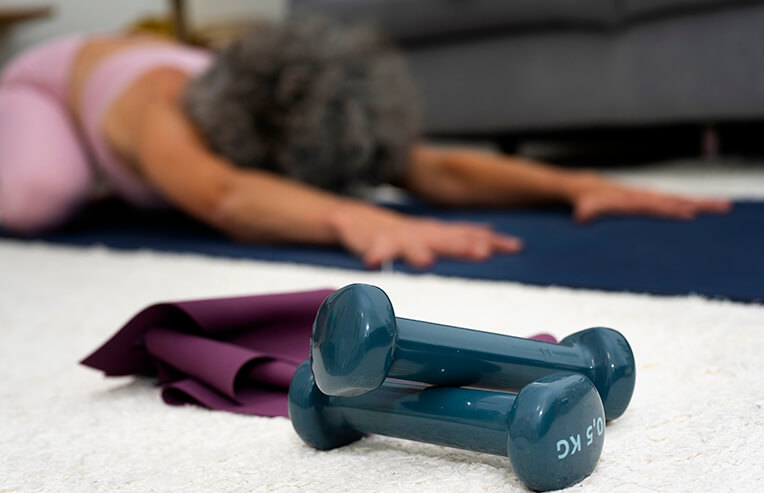
The new focus of your workouts should be progressive resistance training—also known as strength training.
Research shows that strength training is one of the most effective ways to offset the negative effects of menopause. It’s been shown to positively impact:
- Lean body mass11,12
- Muscle mass13,14
- Muscle strength15,16
- Bone mass and bone mineral density17,18
- Sleep quality19
- Cognitive function20
- Insulin sensitivity21
- Cancer survivorship22
Additionally, strength training can help reduce risk of falls and fractures and promote mental well-being.23,24,25
How Many Days and for How Long?
We get it—between family, work, and everyday responsibilities, finding time to exercise can feel nearly impossible. But even short, consistent workouts can make a big impact. While there’s no one-size-fits-all routine, the goal is to focus on consistency and enough intensity to challenge your body and support your changing hormones.
The World Health Organization recommends resistance training 2 to 3 times weekly. Your training should involve all major muscle groups and be performed at moderate or greater intensity.26
You don’t have to be an athlete or have a sports background to start lifting weights. Muscle strength and growth can be achieved at any intensity and number of repetitions.27 If you’re a beginner, you can start with just 5 to 6 sets per muscle group per week.28
The goal is to lift to failure. This principle simply means repeating an exercise until you can’t physically complete another rep with proper form. Remember, good form is key!29
The Cardio Question: HIIT and Cortisol
As your hormones shift, so does your body’s response to exercise. That means the workouts that worked in your 20s and 30s may no longer deliver the same results in your 40s and beyond.
High-intensity interval training (HIIT for short) is a great example of this. As its name suggests, HIIT is a training method in which you alternate between short, intense bursts of exercise and a quick recovery period.
This type of training is incredibly effective at burning calories and gaining muscle.30,31 But for whom? One meta-analysis examined the efficacy of HIIT on weight loss, total fat mass, and abdominal fat mass in women before and after menopause. The study found that the positive effects of HIIT were significant only for the pre-menopausal women.32
The primary reason for this difference may lie with cortisol, your “stress hormone.” While it’s best known for its role in the “fight-or flight” response, cortisol is critical for important functions in your body, including regulating metabolism, reducing inflammation, and modulating mood and sleep.
So what does cortisol have to do with HIIT?
Exercise is a stressor on your body. And high-intensity workouts cause cortisol to spike. This is a normal, beneficial, and temporary response. But HIIT and long-duration cardio exercises like long-distance running can cause significant spikes in cortisol, and if done too frequently, cortisol can stay elevated. Chronically elevated cortisol signals to your body that it should hold on to fat, which is not something you want.
Remember, it’s not all or nothing. While your focus may shift, it’s still perfectly okay to do high-intensity workouts 1 to 2 times a week. But if you notice anxiety or sleep disruption after an intense workout, it’s time to scale back.

Rebalancing Your Cardio Workouts With Heart Rate Zone Training
If you’re wondering whether your workouts are actually supporting your goals, tracking your heart rate can help. It’s one of the most effective ways to measure intensity—which plays a key role in whether you’re building strength, burning fat, or overdoing it.
That’s why heart rate training is so valuable—for everyone from beginners to athletes. It helps you train smarter by ensuring your workouts are aligned with your goals and your body’s current needs.
Heart rate training breaks exercise intensity into five distinct zones, each representing a percentage of your maximum heart rate (MHR):
- Zone 1 (Low intensity, 50% to 60% of MHR): This zone is ideal for warming up or cooling down.
- Zone 2 (Moderate intensity, 60% to 70% of MHR): Exercises in Zone 2 should allow you to talk, though you may be breathing a bit harder than usual. Examples include light jogging, casual swimming, and skating.
- Zone 3 (Moderate to high intensity, 70% to 80% of MHR): Here your breathing rate increases significantly. Examples include running and rowing.
- Zone 4 (High intensity, 80% to 90% of MHR): Exercises in this zone cause a rapid buildup of lactic acid, which leads to muscle fatigue. Examples include heavy weightlifting and HIIT.
- Zone 5 (Very high intensity, 90% to 100% of MHR): This is the maximum effort zone. Workouts in this zone include sprints and plyometric drills.
If you’re in your 40s or beyond, it’s time to shift your focus from high-intensity cardio to Zone 2 training. These workouts offer a more sustainable way to burn fat, boost metabolism, and support hormone balance—without the strain and exhaustion often caused by high-intensity routines.
Examples of Zone 2 exercises include:
- Brisk walking
- Slow jogging at conversational pace
- Elliptical machine or rowing
- Slow and steady lap swimming
- Low-impact aerobics or dance
- Hiking
Aim for at least 150 minutes of moderate-intensity aerobic activity per week.33 A mix of Zone 2 training, strength training, and occasional short sprints is a powerful combination for improving metabolic health, weight balance, and overall strength.
When possible, take your cardio outside and bring a friend along. According to the Blue Zones literature, the world’s longest-lived people spend time with people who support healthy behaviors to keep each other motivated.34
Most importantly, do what you enjoy!
Fueling Your Body Inside-Out
Maintaining muscle mass isn’t just about physical exercise; it’s also about nutrition.
Research supports increased protein intake for women over 40 to maintain and improve muscle mass. According to one recent study, a moderately high protein intake of 1.2 grams per kilogram of body weight per day significantly improved muscle mass and strength in women with sarcopenia.35
Animal-based proteins (grass-fed beef, poultry, eggs, fish) are preferable due to their complete amino acid profiles. The addition of amino acid supplements can also support muscle growth, strength, and recovery.36

When Nothing Seems to Work
If you’re doing all the right things—eating enough protein, lifting weights, sleeping well, and managing stress—but still not seeing results, the solution may not be another workout or diet tweak.
Instead, those frustrating symptoms could be signs it’s time to explore:
- Gut health: High cortisol levels can have an inflammatory effect on your digestive system (leading to leaky gut) and disturb the balance between beneficial and harmful gut microorganisms.37 Support your gut with a healthy, whole-food diet rich in probiotics, prebiotics, and fiber.
- Nutrient deficiencies: Deficiencies in vitamin D, vitamin C, calcium, protein, B vitamins, magnesium, iron, zinc, and omega-3 fatty acids can impair metabolism and muscle repair.38,39
- Insulin resistance: With insulin resistance, cells in your body don’t respond properly to insulin, leading to high blood glucose (sugar) levels. Your body turns the extra blood glucose into fat, which causes weight gain. Insulin sensitivity can be improved by reducing stress, avoiding excess sugar, moderating processed carbohydrate intake, getting adequate exercise, and getting a good night’s sleep.
- Thyroid health: Your thyroid acts as the master regulator of metabolism, muscle function, mood, and overall well-being.40,41,42 As women age, the risk of hypothyroidism (an underactive thyroid) increases—and its symptoms, like weight gain, fatigue, and mood changes, often overlap with those of perimenopause. If you’re doing everything right but still not seeing results, it’s worth exploring whether your thyroid may be playing a role.43
These are just a few potential reasons you may not be seeing expected results. It also goes to show the importance of a personalized, functional medicine approach to health, especially for women over 40. We don’t just treat symptoms; we identify the root cause of your frustrating symptoms and find lasting solutions that will help you achieve the results of your efforts.
Reclaim Your Strength After 40—Right Here in Boston
The right exercise in your 40s and beyond isn’t just about how you look—it’s about protecting your future. Strength supports your bones, prevents injury, and helps balance your metabolism and hormones.
Start this week by simply tracking your sleep, mood, and energy. And if you’re curious about how to align your workouts with your hormones, schedule a free consultation. We’ll help you create a powerful, sustainable plan so you can feel strong, energized, and in control—now and for decades to come.